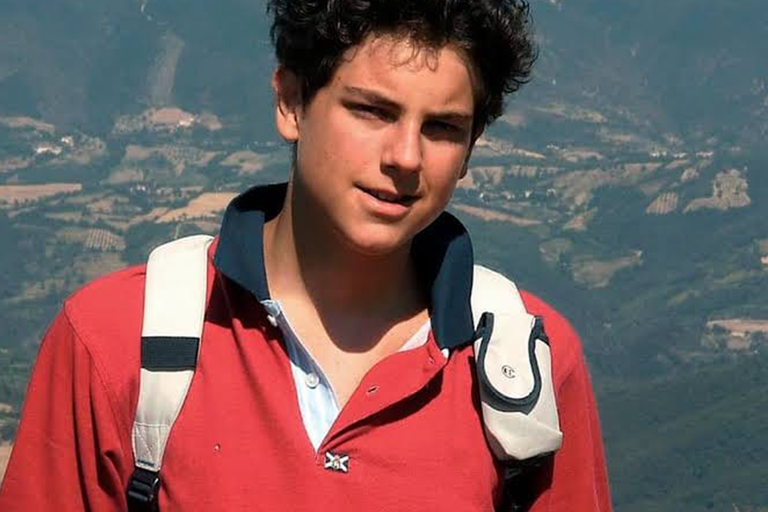
Where is your rosary right now? Because if it’s in a drawer, in your purse, or hanging somewhere in your room, what Carlo Acutis wrote in his notebook before he died at age 15 is going to sting a little. Not because you’ve done anything wrong, but because no one told you what he discovered.
And he knew it. He documented it and made it clear that the place where your rosary rests while you sleep is not a minor detail. It’s precisely where it’s decided whether your prayer reaches you or gets stuck.
Consuelo had been praying the rosary every day for 72 years until one night she moved it to a single spot.
The next morning, her doctor called her with something the radiologist couldn’t explain. Stay tuned because what Carlo wrote in that navy blue notebook, you deserve to know.
There are three symptoms that indicate your rosary is in the wrong place. First, you wake up with a feeling of heaviness or anxiety for no apparent reason.
Second, your prayers during the day feel empty, as if you’re speaking into a closed room. Third, the problems you pray about most often remain exactly the same after months or years.
Marcos Aurelio Cervantes Palomino, 68, had all three symptoms for 11 years. When he learned what Carlo had recorded and changed the location of his rosary just one night, he told his wife something she later recalled with tears.
Before I tell you what Marcos discovered, let me tell you how Carlo Acutis came to know this.
Blessed Carlo Acutis, born in London on May 3, 1991, and raised in Milan, is known worldwide as the first millennial to be beatified by the Catholic Church. But there is something very few people know.
In addition to his renowned project documenting Eucharistic miracles in 142 shrines around the world, Carlo kept a second notebook, navy blue with a hand-drawn white cross, where he recorded testimonies from people who had experienced extraordinary healings and protections related to sacramental objects.
Father Roberto Fisichela, who met Carlo in 2005 when the young man was just 14 years old, described this notebook as “the most meticulous spiritual diary I have ever seen in a young person his age.”
Carlo had identified a recurring pattern in 1,340 documented testimonies between 2003 and 2006. Those who received protection and healing while sleeping did something specific with their rosary before going to bed.
It wasn’t the prayer itself that changed, but the location. And what happened the first night Consuelo Rafaela applied exactly what Carlo had written on page
47 of that blue notebook left her own doctor searching for answers that science couldn’t provide, but Consuelo wasn’t the only one. And what you’re about to hear has no natural explanation.
When Father Roberto Fisichela shared the contents of Carlo’s blue notebook with his prayer community in 2019, something extraordinary began to happen.
In less than six months, testimonies arrived from four different continents. Fermín Alejandro Solís Gutiérrez, 71, had suffered from severe chronic insomnia for 16 years.
Three sleep specialists, two different medications, cognitive therapy for 14 months.
Nothing worked. The first night he applied the rosary method, as recorded by Carlo, he slept for seven continuous hours. That hadn’t happened since November 2003. In exactly 21 days. His doctor cut his medication in half.
“I feel someone placing their hand on my forehead every time I close my eyes,” she told her daughter. Then came the case of Dolores Esperanza Morales Vega, 75, who had been praying for her eldest son’s conversion for 19 years without any visible results.
The first week she tried the method, her son called spontaneously and asked her to go to Mass with him. He hadn’t been in 22 years. She couldn’t explain why she felt that impulse that particular morning.
And then there’s the testimony of Ángel de Siderio Trujillo Campos, 66, who had an unresolved conflict with his brother since 2007 and who, on the third day of the method, received a text message that began: “Brother, I need to ask for your forgiveness.” Do you notice the pattern?
In each of these cases, the prayer didn’t change, only the rosary’s placement.
Carlo Acutis discovered why, and now I’m going to reveal it to you exactly. The mistake that 8% of devout Catholics make is believing that the rosary is solely an instrument of active prayer. You use it when you pray, and when you finish, you put it away.
This belief, while understandable, completely deactivates half of its spiritual power. Carlo Acutis wrote on page 47 of his notebook in his characteristic small, cramped handwriting:
The rosary doesn’t sleep.
You do, but the rosary continues to work if you place it correctly. The problem isn’t a lack of faith or discipline. The problem is that when the rosary is isolated from the body, its spiritual influence is diminished. fra
It exists in the space of the room without an anchor point.
It’s like lighting a candle in a sealed room. The flame is there, but the light doesn’t reach where it needs to because there’s nothing to direct it.
Carlo documented this principle in his 1,340 testimonies and called it, with his characteristic simplicity, the position of nocturnal surrender.
The 94 negative testimonies he also recorded, those of people who didn’t get results, had one element in common. The rosary was in the room, but not in contact with the body.
Distance matters, not metaphorically, but physically. But knowing this isn’t enough yet.
There are two more elements, without which the method is incomplete, and the second is the one that most surprises those who discover it.
The second element that Carlo identified is the most specific to the entire method and explains why the rosary on the nightstand doesn’t have the same effect as the rosary in the hand.
It’s not enough for the rosary to be near your body.
Carlo discovered through his 1,340 testimonies that the specific place is the left hand, gently closed over the beads, with the crucifix facing the heart.
Not the right hand, not the neck, not the chest against the fabric of clothing, but the left hand with the crucifix pointing inward. The theological reason he noted in that notebook is profound, yet simple to understand.
The left hand is anatomically closer to the heart, and the heart, in biblical tradition, from the Song of Songs to the Gospel of John, is the place where the divine presence dwells in the believer.

Embrina 1 Kings 19:12. God did not appear in the strong wind, nor in the earthquake, nor in the fire, but in the gentle breeze that came after all of that. Carlo interpreted this verse as a perfect image of nighttime prayer.
God works in the silence of the sleeping body, in the gentle rhythm of the heart that beats without the mind’s command, when the conscious will no longer interferes with its own requests and expectations.
When the rosary rests on the left hand with the crucifix facing the heart, the body and the sacred object create what Carlo called a living monstrance.
Among the 1,340 testimonies, Carlo found 67 people who had habitually used the rosary in their right hand, without success.
When they switched to the left hand, 61 of those 67 people reported noticeable changes within the first week.
But there is still a third element, and Carlo believed that without it, the previous two only functioned at half their capacity.
This third element is what multiplies all the others, and Carlo described it with an economy of words that reflects his theological thinking, always closer to the simplicity of St. Francis of Assisi than to lengthy discourses.
It is not an additional physical position; it is an action performed just before closing the eyes: the prayer of surrender in three precise phrases.
The three phrases Carlo wrote on the last page of his blue notebook are: “Jesus, I surrender this night to your presence. Mary, cover what I cannot see.
Lord, may your will be what I find upon waking.” Nothing more, no added specific requests, no lists of urgent needs, no lengthy supplications about concrete situations.

Carlo wrote something that seems counterintuitive to someone accustomed to praying fervently before sleep.
Long, detailed requests before closing one’s eyes activate the nervous system, keep the brain in a state of unresolved issues, and close precisely the channel of spiritual receptivity that sleep can open.
Silent surrender leaves it open. The difference between asking and surrendering is not merely semantic or poetic; it is fundamental. When you ask, you build an expectation that sleep has to bear.
When you surrender, you free up inner space so that grace can enter unhindered.
Carlo summarized it in a phrase he underlined twice. The prayer that works while you sleep doesn’t need long words; it needs open hands.
With these three elements applied in order, you’re ready to begin tonight. But before you do, I must warn you about the three obstacles that can block your results, even if you do everything else perfectly.
The first is the most silent and the most destructive because it operates below the conscious level.
Incomplete forgiveness toward someone with whom you share a room or with whom you once shared a bed. It’s not hatred that Carlo identified as a spiritual blocker.
It’s something much more subtle and difficult to detect. It’s that forgiveness you declare with your mouth with complete sincerity, but which your body hasn’t yet finished processing.
Aurelia Perpetua González Rivas, 70, applied the method for three full weeks with discipline and faith, without feeling any results.
In a casual conversation with her…
The professor, after mass, mentioned in passing, as an unimportant historical fact, that her husband, who had died in 2014, had been unfaithful to her in the early years of their marriage.
“I forgave him a long time ago,” she said, but her voice changed slightly as she said it. A change that only someone listening closely could notice.
Her confessor asked her to write a letter to her husband that afternoon as if he were still alive, telling him everything that her declared forgiveness hadn’t yet been able to express.
The exact pain, the year she discovered him, what she felt that night, what she never told him afterward. It took Aurelia almost two hours to finish the letter.
She wouldn’t send it anywhere, but when she finished, she cried for 40 minutes. That same night, with her rosary in her left hand for the first time in weeks, she slept for nine hours straight.
The next day, chronic hip pain that had plagued her since 2016 had lessened enough for her to walk down the stairs of her house without using the banister for support for the first time in years.
How do you know if you have this block in your life? Think right now about the person you have most recently forgiven or the closest person to you whom you carried in prayer during Years.
Your body tenses when you bring her to mind. Your jaw clenches slightly. If there is any physical tension, there is something that the official apology didn’t quite release.
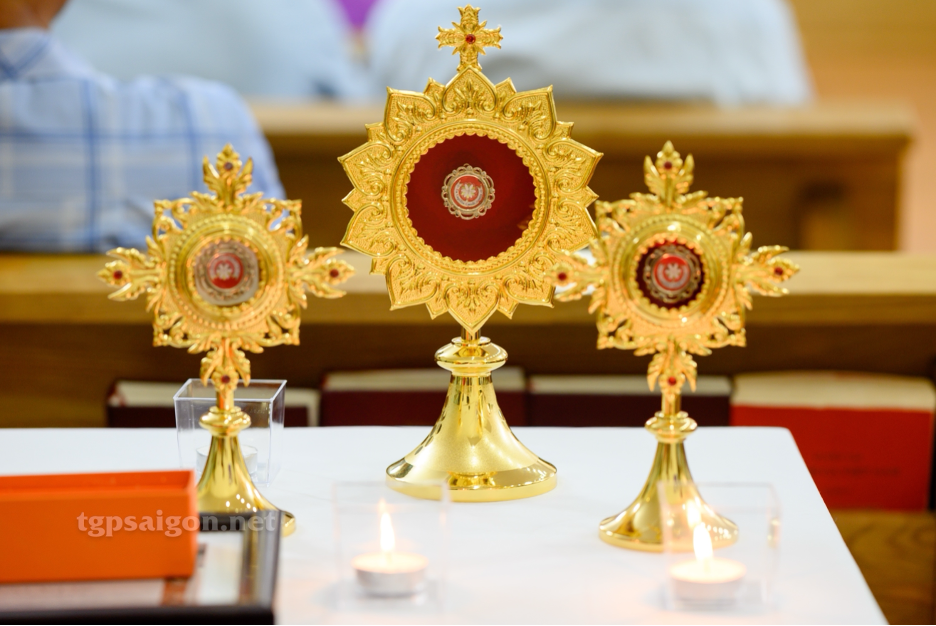
The solution isn’t a confrontation or a difficult phone call. It’s a letter you write just for yourself, where you say exactly what your heart still holds.
Carlo called this closing the soul’s file. The second block is doubt disguised as theological prudence, and it especially affects people with a solid religious background.
Celestino Rigoberto Vargas Montoya, 72, read about Carlo’s method in February 2022 and spent six weeks consulting two different priests, reviewing the catechism, searching for doctrinal sources, and asking if there were any theological objections before applying it.
One priest told him it was perfectly valid. The other told him he saw no objection.
Even so, Celestino waited two more weeks as a precaution. During those eight weeks of investigation, his blood pressure remained high, his insomnia continued, and the situation with his son…
With whom he had no communication, things continued as before. When he finally applied the method on the second night, he felt something he described as a warmth that began in his left palm and slowly traveled up his arm to his chest.
Two weeks later, his doctor found that his blood pressure had normalized for the first time in eight years without any medication adjustments.
His son called 17 days later. Carlo, who studied the catechism more deeply than most adults in his parish, wrote in that notebook in his characteristic handwriting: “Prudence that postpones grace is not a virtue; it is fear in disguise.”
How do you know if this is your block? If you’ve been thinking about applying something like this for more than a week without taking the first step, that waiting period has a more honest name than discernment.
The solution is this: Apply it tonight just once. Only once.
If you feel absolutely nothing different tomorrow, you have the whole week to continue evaluating. The third block is the most frequent among people with deep faith and long experience in prayer: rigid expectations about the form the answer will take.
Narcisa Elvira Castellanos Peña, 69, applied the method for two weeks with absolute consistency, hoping for healing in her right knee, which had limited her ability to walk since 2018.
She noticed no change in her knee. She decided the method wasn’t working for her.
But during those same two weeks, without connecting it to the method, she noticed that her granddaughter, who had cut off communication with the family three years prior, called spontaneously to apologize; that her blood pressure, which she routinely checked every Monday, had consistently decreased for three consecutive weeks; and that for the first time in years, she didn’t wake up with the dull anguish that had accompanied her every morning since 4:00 a.m.
Narcisa had established a single criterion for evaluating the result: her knee. And since her knee didn’t change in two weeks, she concluded it hadn’t worked.
What God was healing was different from what she had included on her list. Carlo wrote this with words that deserve to be remembered: “Don’t tell God where…” You bleed. Give him your whole body. He knows exactly where to place his hand first. The solution to this blockage requires a single act of courage.
For the first 7 days, suspend judgment.
Don’t decide if it works or not. Just observe. Each morning, write down in three words what you notice is different, even if it’s not what you expected. On the seventh day, reread those notes. What you find there will be your evidence.
Now that you’ve identified your potential blocks, you need to understand
To understand why this works according to Scripture, Carlo Acutis always insisted that nothing he documented was his own invention or a spiritual novelty. Everything was rooted in the most ancient tradition of the Church.
Psalm 911:11, which Carlo quoted in his notebook more than any other verse, says, “For he will command his angels concerning you to guard you in all your ways.”
Carlo interpreted this text in a way that most people overlook. “In all your ways” includes the way of sleep, the way of nocturnal unconsciousness.
Angels don’t work only when you are awake and can cooperate with their action; they work especially while you sleep, because that is when your will withdraws, the mind ceases to create obstacles with its analyses, and grace can act with complete freedom.
Saint John of the Cross, in The Dark Night of the Soul, describes this principle with a depth that Carlo admired. The soul advances further in dark and silent contemplation than in any conscious religious activity, because in silence the divine presence can touch what activity keeps protected.
Sleep, when protected by the properly placed sacred object and the prayer of surrender, becomes an active time of grace, not wasted time. The second verse that Carlo underlined three times in that notebook comes from Matthew 11:28.
“Come to me, all you who are weary and burdened, and I will give you rest.” Carlo wrote in the margin of that verse in even smaller print. The rest promised here is not metaphorical; it is literal and comes with instructions.
Now you have the foundation. Let me give you the exact steps to begin tonight. Tonight, in the next 30 minutes before you go to bed, do this exactly and in this order. First, find your rosary.
If it hasn’t been used or moved from its place for more than a year, run it under cold water for 10 seconds and dry it with a clean cloth before continuing.
This gesture is not superstition or magic; it is an intentional declaration that you are returning it to its active function. Carlo called this awakening the object.
Place it on the bed while you prepare the rest. Second, turn off all screens in your room before going to bed, including the television on standby if there is one. This isn’t a superstitious requirement. Carlo documented that in 78% of the testimonials that didn’t work, there was at least one screen with some level of brightness or sound in the room.
The reason is simple.
The light from screens keeps the nervous system in a state of low alertness, which is the exact opposite of the nighttime spiritual receptivity that the method requires.
Third, standing by your bed before going to bed, hold the rosary in both hands for a full 60 seconds in silence. Don’t pray yet, just hold it. Carlo called this moment the time of recognition.
You are reminding your body that this object has sacred weight, that it has passed through hands in moments of real pain, and that this weight has a meaning that goes beyond the plastic or metal it’s made of.
Then, in a low but audible voice, say the three phrases once. Jesus, I surrender this night to your presence. Mary, cover what I cannot see. Lord, may your will be what I find when I wake.
Fourth, lie down in your usual sleeping position. Place the rosary in your left hand, gently closing your fingers around the beads with the crucifix facing your heart. There’s no need to squeeze your hand tightly, just hold it naturally.
If the rosary falls during the first few minutes as you drift off to sleep, don’t worry, the initial gesture has already been made. What matters is the intention at the beginning, not the position at the end.
Blessed Carlo Acutis prepared a complete guide to nighttime prayer with the 30-day method for deepening your devotion week by week. You can find it in the first pinned comment of this video.
Thousands of people are already using it, and the testimonies they are receiving are extraordinary.
Download it tonight before going to sleep. This week, for the next seven consecutive days, maintain this routine at the exact same time each night.
The most effective time frame, according to the experts, is between 10 and 11 p.m. It’s based on those 40 testimonials from Carlo. If your life situation doesn’t allow for that time, any hour before midnight works just as well.
What can’t change is consistency. Seven nights in a row, every morning upon waking, before checking your phone or the news, take exactly two minutes to notice how you’re feeling.
Is there something different in your body this morning, something in your emotional state, a thought that came to you differently? Don’t judge yet whether that’s a result of the method or not. Just observe. Write down three words on a small piece of paper. Carlos recommended the seventh day as the first when the effects begin to solidify into visible patterns. This month, if
The first seven days were consistent; add a step at the end of the three sentences. Very quietly, just once, name the person or situation you carry in your prayers most often.
Just the name. No explanation or additional request. Carlo described this step as leaving the letter on the threshold without pushing it. Whoever lives on the other side already knows what to do with what they find there.
Before finishing, I want to ask you three questions that Carlo Acutis asked himself when he documented each new testimony in his blue notebook. Don’t answer them aloud. Let them rest tonight next to your rosary in the palm of your left hand. First question:
How many nights this year have you truly fallen asleep in peace, without a lingering thought, without a burden left unreleased, without something you were still carrying after turning off the light?
Second question: If God could act freely in your body and in your life during the eight hours you sleep tonight, without your supervision, without you telling Him what form to take or what result to produce, would you be willing to relinquish enough control to allow Him? (Third question)
Is there someone in your life who needs protection while they sleep tonight? Someone no one else is praying for right now? Because Carlo’s method isn’t designed only for the person applying it.
He documented 214 cases where the person who started the method saw the first result not in themselves, but in someone in their household. The rosary in the left hand covers the entire room, not just the person holding it. You didn’t arrive at this video because of a platform’s algorithm.
Algorithms have no soul. You arrived because something within you is ready to receive what you’ve been waiting for. This moment is not a coincidence.
God is touching your heart right now, at this very instant, as you listen to these words, because He knows there’s something within you that needs healing during the silence of this night.
Something your waking mind hasn’t been able to let go of, no matter how many years you’ve tried. The cost of not applying this tonight is exactly the same as what you’ve been experiencing so far.
And you know better than anyone how much longer you can carry this burden. I challenge you to do just one thing before you close your eyes tonight. Hold your rosary for 60 seconds in silence and say these three phrases. Just that.
If you feel God is calling you to begin today, tell us what you most need Him to heal while you sleep. Your testimony has more power than you can imagine.
And if this resonated with your heart, share it with three people you need to sleep peacefully tonight. It’s no coincidence who came to mind right now.
May the peace of Christ, which surpasses all understanding, guard your heart on this journey. May the Father, the Son, and the Holy Spirit pour out their grace upon you tonight and every night to come.
May Blessed Carlo Acutis intercede for your rest, your healing, and for all those you love. Your transformation begins tonight. Amen. You didn’t get here by accident.