They say some secrets can change the way we see life. And Carlo Acutis kept several that very few know.
This young man, who will soon be proclaimed a saint by Pope Leo X, was not only a boy passionate about technology and Jesus, but also someone who left hidden traces that are now beginning to come to light. Today I want to tell you 15 little-known secrets about Carlo.
I warn you, after hearing each one, you will never see faith, youth, or even the internet the same way again, because Carlo wasn’t just any young man; he was ahead of his time. The first thing many people don’t know is that from the age of three, Carlo already had a special sensitivity toward the sacred. Whi
le other children only thought about playing with dolls, he insisted on going into churches to greet Jesus in the tabernacle.
His mother, Antonia, remembers that many times she had to practically drag him by the hand to get him out of the chapel, because he could stay there as if he already knew he was in front of someone real.
It wasn’t just a childish whim; it was a thirst for God that would mark his entire life.
Another surprising secret lies in his First Communion. Carlo received it at the age of seven, something uncommon in his time, and from that day on, he never missed a daily Mass, not even when he was traveling or on vacation
In fact, his number one concern when leaving home wasn’t where he would sleep or what he would eat, but where he would find the nearest church so he wouldn’t miss his appointment with Jesus.
And here’s another detail that’s quite striking. Carlo used to say something that seemed like a simple play on words, but it was a profound lesson. “When you stand in the sun, you get a tan. When you stand before Jesus in the Eucharist, you become a saint.” He was only seven years old when he wrote that. Do you realize that? While most children dream of being a soccer player or an astronaut, Carlo was already thinking about how to achieve holiness, but he wasn’t a strange or withdrawn child; quite the opposite.
He liked video games, detective movies, playing soccer with his friends, and even making homemade short films with his dogs and cats. That’s another striking thing about him. He never strayed from normal life, but he knew how to give it a supernatural meaning. In the midst of the everyday, Carlo lived with his gaze fixed on the eternal. The curious thing is that he also had a very human side, with flaws and struggles. Carlo loved Nutella and ice cream, and at one point he even gained weight.
What did he do? He started a self-evaluation journal where he noted every effort to grow in virtue, even details like how he treated his parents or whether he had been patient with his classmates. At that age, who does such a serious self-examination every day? That was Carlo, a teenager who fought against himself as if he were in the most important battle of all. Furthermore, there’s another little-known secret. Carlo had a great musical talent; he played the saxophone and enjoyed it immensely.
But even with music, his focus was always on offering what he had to God and others. He didn’t use his gifts to shine, but to serve. Moreover, Carlo had a saying that today sounds like a direct challenge to all of us: “Everyone is born, but many die like photocopies.” This line, which many share without realizing its weight, reflects his conviction that each person has a unique mission in the world and that wasting it by following fads or fleeting trends is life’s greatest mistake.
And if you’re still not amazed, listen to this. Carlo wasn’t just a computer genius; he created a digital exhibition on Eucharistic miracles from around the world when he was only 11 years old. That work, which began on his personal computer, reached thousands of parishes and continues to inspire millions to this day. He used up three computers in the process, yet he persevered. Because for him, the internet was a tool for evangelization, not just a pastime.
Behind all this, Carlo hid a certainty he often repeated: “My life’s project is to always be with Jesus.” And he didn’t just say it; he lived it in practice, in small gestures, in silent service, in the smile with which he helped those in need. What many still don’t know is that Carlo offered all his sufferings for the Pope and for the Church. When he was diagnosed with the fulminant leukemia that would end his life in just a few days, Carlo said without trembling, “I offer everything for the Pope and for the Church.”
And today, as we wait for Pope Leo to canonize him, those words seem like a prophetic echo, reminding us that even pain can be transformed into love and hope. Carlo was extraordinary precisely in the ordinary. That is the great secret we will unravel in this video. One of the most striking secrets of Carlo Acutis was his relationship with the
Death. It seems incredible, but this young man, barely 15 years old, didn’t fear it. He saw it as an expected encounter.
On his computer, a video was found that he had recorded a few months before his passing. There, with a serene smile, he uttered a phrase that left everyone stunned: “I am destined to die.” He didn’t say it with sadness or despair, but with peace, as if he already knew that heaven awaited him with open arms. That subtle detail reveals a level of spiritual maturity that disarms anyone. And the most surprising thing is that Carlo didn’t just talk the talk. From a very young age, he would tell his mother that he would die young and that what mattered wasn’t how long one lived, but how one lived.
When he was diagnosed with acute leukemia, he didn’t lose his composure. On the contrary, he told his parents, “I won’t leave here, but don’t be afraid. I offer my suffering for the Pope and for the Church.” That certainty is disconcerting, because we’re not talking about an elderly priest, but a teenager about to face what terrifies most adults. Another of Carlo’s lesser-known secrets concerns his ability to see beyond the surface.
At age four, after his grandfather’s death, he told his mother, “I saw my grandfather. He’s in purgatory. He needs our prayers.” For Antonia, his mother, it was a complete shock because Carlo couldn’t possibly have imagined such a thing. From then on, he began to pray devoutly for the souls in purgatory, even performing small penances for them. This trait stayed with him until the end and became part of his hidden mission: to pray for those whom no one remembers.
There is also the mystery of his body. In 2019, thirteen years after his death, it was exhumed and transferred to Assisi. What was found was unexpected. His body was remarkably well-preserved. He wasn’t perfectly preserved, as if time hadn’t passed, but he was remarkably intact, with his organs intact and his hair curly, as if he had slept only a few hours. His mother recounts, with emotion, that seeing him there in his jeans and sweatshirt was like reliving the last image she had of him.
For many, this was a sign that Carlo should be presented to the world as a saint of the present, an ordinary young man who dressed like any other teenager, but who lived with an extraordinary heart. Another curious secret that few know is that Carlo predicted his mother would have twins. He said this when she was about to turn 40, something that seemed impossible. Four years after his death, Antonia gave birth to Francesca and Michele. She always says that Carlo was an instrument not only in bringing her closer to faith, but also in giving new life to the family, even after his passing.
And this reinforces the idea that God continued to work through him, even though he was no longer physically present. But let’s return to his daily life because secrets are hidden there as well. Carlo was a very ordinary boy, but at the same time, radical in his way of living his faith. For example, he couldn’t stand the idea of the women who helped in his house having to pick up his things. He would get up early to tidy his room and make his bed because, he said, it wasn’t fair that someone else should have to do what was his responsibility.
That simple detail shows the consistency between what he believed and what he did. At school, although he was very studious, he also had to struggle with his weaknesses. He had a tendency to play pranks in class and distract others, but in his personal diary, he wrote that he had to work on that because he understood that the real battle wasn’t with others, but with himself. His phrase sums it all up: What good is winning 1,000 battles if you can’t conquer your own passions?
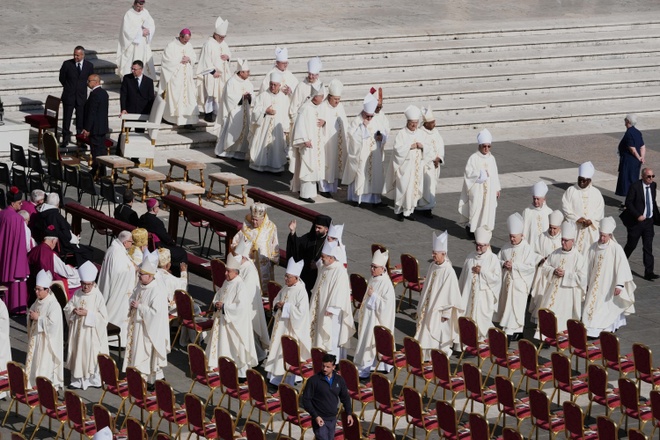
The real battle is within us. And speaking of battles, Carlo resolved to live with purity in a world that offered him the exact opposite. He was handsome, charming, rich, and many girls were interested in him. However, he always said that the body was a temple of the Holy Spirit and that sexuality should be experienced as a gift, not an object. It pained him to see his friends involved in pornography or empty relationships, and he encouraged them to see love as something great and true.
This stance in the 21st century made him go against the grain, but he never lost his joy or his friendships with others. These details show us that Carlo didn’t live in a bubble. He struggled, fell, and got back up, but he did so with a distinctive approach. He never stopped looking toward God. And that is the true secret of his life, the one we are gradually discovering and that continues to touch hearts around the world. One of Carlo Acutis’s most tender and little-known secrets was his way of evangelizing in silence, without imposing, touching hearts with small gestures.
For example, with his first savings he didn’t buy a new video game or fashionable clothes, but a sleeping bag for a homeless man he saw every day on his way to mass. That detail
It seemed insignificant to him, but that man never forgot it. Carlo wasn’t content with just praying; he wanted to act. That blend of prayer and action is what makes his testimony so unique. Another secret is that Carlo kept a very detailed spiritual journal. It wasn’t just about noting what he did well, but about frankly analyzing where he had failed and how he could improve.
In his notes, he wrote things like, “Today I talked too much in class; I need to be more patient with my parents,” or “Today I helped a classmate with their homework.” He was like a kind of personal trainer for his soul. He set goals for himself and graded himself harshly because he said that holiness is built in the small things of each day. And here’s a secret that is truly moving. Carlo was a great digital missionary before the term even existed. He designed websites for his school and his parish, but above all, he created a virtual exhibition on Eucharistic miracles that continues to travel the world.
He was barely 11 years old when he began gathering information and went on to document more than 160 cases in 20 countries. His work has reached over 10,000 parishes worldwide, and incredibly, he did it in an era when the internet was nothing like it is today. As his mother said, he wore out three computers in the process because he worked tirelessly. But it wasn’t all easy. Carlo also had to battle vanity. He was an attractive and charming boy, and could easily fall into the temptation of showing off.
However, he set limits for himself. He didn’t spend money on expensive clothes, nor did he seek attention. On the contrary, he would often say, “Not me, but God.” And when someone praised his computer skills, he would reply, “The true genius is God, who gives us the mind to discover it.” This hidden humility is another secret that few know, and it makes him even greater. There is a secret that especially surprises believers. Carl offered his lifelong battle with fulminant leukemia for the Church and the Pope, but he also said he wanted to go straight to Heaven without passing through
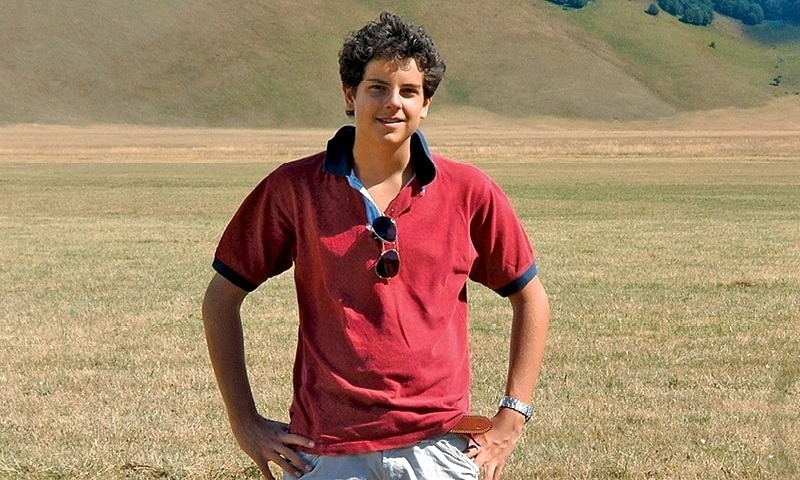
Purgatory. To achieve this, he offered every small suffering, even the slightest, like when he endured a headache or had to study a subject he disliked. He said everything could be offered up and transformed into love. This way of living is a silent catechesis for anyone who suffers. He also had a kind of vision of the future. He said the great danger in the world was that many would be ensnared by false idols: money, fame, fashion.
That’s why he repeated, “Sadness is looking at yourself. Happiness is looking at God.” The curious thing is that this phrase sounds almost like an antidote to today’s problems: anxiety, depression, emptiness. Carlo saw it clearly from his adolescence. Another secret that few share is the influence he had on his mother’s conversion. Antonia admits that before Carlo, she hardly ever went to Mass and had only received Communion three times in her life.
At her baptism, her First Communion, and her wedding. It was her son who led her by the hand toward a living faith. Imagine that. A child evangelizing his own mother. She herself confesses that Carlo was her little savior because, thanks to him, she understood that Jesus was truly present in the Eucharist. And speaking of family, another impressive fact is that Carlo predicted the birth of his twin siblings, Francesca and Michele. He asked his mother, “Will you have twins?” when she was over 40 and considered it impossible.
Four years after his death, the two children were born. For many, this was not a mere coincidence, but a sign that Carlo continued to be present in the lives of his family from heaven. All of this reveals a pattern we sometimes forget. Carlo was neither a perfect child nor an angel in disguise. He was a normal teenager who knew how to orient his life toward what was essential. His secrets weren’t magic tricks, but concrete decisions. Tidying his room, fighting vanity, offering up his suffering, evangelizing online—small things that, added together, became a direct path to holiness.
There’s a secret that shakes even the most skeptical. Carlo seemed to have a very clear premonition about his end. Months before he died, he recorded a video on his cell phone in which he said, “I am destined to die.” He didn’t say it with fear; he said it smiling, like someone announcing a journey they’ve been waiting for. That serenity in the face of something that would paralyze anyone else is one of the mysteries that most impresses those who discover it. And what’s most striking is that it wasn’t a fleeting thought.
Since he was little, Carlo had said that he wouldn’t live long, and he accepted it with a disconcerting peace. When his mother asked him if he wanted to be a priest, he would reply that he would discern it in due course, but that the important thing was to always be with Jesus, no matter where he was. It was as if he was certain that his mission would be brief, but intense, and that he should
He was determined to make the most of every minute to leave his mark. Another little-known secret is that Carlo always carried a rosary in his pocket and prayed it every single day without fail.
The curious thing is that he did it even while playing soccer with his friends. If there was a break, he would take out his rosary and begin to pray. He didn’t care what others thought. For him, the Virgin Mary was his confidante. He even included Our Lady of Guadalupe in his presentation on Eucharistic miracles, explaining that he considered her an apparition deeply connected to the mystery of the Eucharist, because she carried the living Jesus in her womb. There’s also the secret of his confessions.
Carlo went to confession every week, not because he was a great sinner, but because he understood that the soul needs to unburden itself to rise to heaven like a hot air balloon. He used this simple comparison to explain it to his friends, and more than one of them ended up receiving the sacrament thanks to him because he presented it as something natural, not as a punishment. Another hidden detail is that Carlo had a special way of looking at pain. He used to say, “Pain is like a scale. When you offer it up, it weighs less,” and he experienced this firsthand.
When the aggressive leukemia struck, the doctors were baffled to see him so calm. A Central American doctor who cared for him in his final days confessed that he helped her face her own cancer with more hope. That testimony remained etched in the minds of those who were near his bedside. Now, one of the most fascinating secrets is his prophetic vision regarding technology. Carlo said that the internet was a gift from God if used well, but a hell if misused.
And he proved it with his own life. Instead of wasting hours on superficial things, he used it to create content that continues to evangelize to this day. They called him God’s influencer, but what he really did was show that the gospel could also reside on screens. Another little-known fact: Carlo had a special love for the poor, but he lived it discreetly, never speaking of it. Many homeless people came to his funeral and recounted how Carlo brought them food, clothing, or simply… company.
His family only learned of his charitable works after his death. Imagine that. A 15-year-old boy secretly helping others without boasting. That generous silence is another of his great secrets. Even in the most ordinary moments, Carlo managed to transform the commonplace into something extraordinary. For example, when he went to a pizzeria with friends, he wouldn’t let the leftover food go to waste. He asked them to pack it up and distributed it on the street to those in need.
For him, every occasion was an opportunity to love, and that’s what’s most impressive. He didn’t need to do spectacular things, but rather to live the small things with immense love. What many don’t know is that Carlo also had a profound sense of humor. He liked to make his friends and even his teachers laugh, even if he was later reprimanded for disrupting the class, but he never lost that cheerful spark. In fact, he said that sadness is looking too much at oneself, and happiness is looking to God.
That was his formula for joy: to look beyond oneself. and place them in heaven. Each of these secrets paints a more complete portrait of Carlo. He wasn’t a picture-perfect child; he was a real young man, with flaws, struggles, and dreams. But with a very clear compass: to live united to Jesus. And that, expressed through simple gestures, is what makes him so relatable to all of us. One of Carlo Acutis’s deepest secrets is that he never settled for a superficial faith.
He said that the Eucharist was his highway to heaven, and he lived it radically. It wasn’t just about attending Mass every day, but about spending long periods in adoration before the Blessed Sacrament. And what’s most impressive is that he didn’t do it as an obligation, but as one visits their best friend. His mother recounts that she often found him sitting silently before the tabernacle, with his eyes closed, as if he were resting in the heart of Jesus.
But here’s a secret hidden in his routine. Carl organized his day around the Eucharist. If he had an outing with friends or a soccer game, he would… The first thing he asked was where the nearest church was. He wouldn’t start anything important without making sure he was united with Jesus at Mass. This radical order is hard to understand in a teenager, but it explains why his life, though short, had such a great impact. Another secret is that Carlo had a different view of wealth and material possessions.
Although he came from a well-to-do family, he was never seduced by luxury. He dressed simply in jeans, a sweatshirt, and sneakers and didn’t try to stand out with expensive brands. He said that a person’s dignity doesn’t depend on what they have, but on who they are, and that consistency was evident. The same goes for his friends.
He shared a meal with his schoolmates more than with the poor in the neighborhood. He made no distinctions, treating everyone as equals. A curious detail that few know is that Carlo had a great talent for programming.
He could design websites with impressive ease, even more so than many experts of his time. And yet, he never used that talent to become famous or to make money. He put it at the service of faith, creating his exhibition on Eucharistic miracles. This exhibition not only toured parishes but also reached schools, universities, and even countries where young people had almost no contact with the Church. Carlo understood that the internet could be a bridge, and he crossed it before anyone else.
Another surprising secret: Carlo had big dreams for the Church. In his personal notebook, he wrote that he wanted to help churches be as full as stadiums. This comparison reflects something that troubled him greatly. He saw thousands of people excited at a concert or a soccer match, but it pained him to see empty churches during Eucharistic Adoration. That’s why he dedicated so much effort to showing that Jesus is alive on the altar. For him, if people truly understood this, churches wouldn’t have enough room to hold all the faithful.
And here’s a hidden fact that many don’t know. Carlo offered his life not only for the Pope and the Church, but also for those souls furthest from the faith. He said that his greatest sadness was thinking about those who didn’t know Jesus. That’s why, when he prayed, he always included those who lived far from God. He was a young man who didn’t think only of himself, but of the salvation of all. This universality is what makes him so beloved today, by children and adults alike on every continent.
Another intimate secret was his way of experiencing prayer. Carlo prayed the rosary every day, but he didn’t do it mechanically. In each mystery, he included specific names: a sick friend, a teacher, a poor person he had seen on the street. He didn’t pray in the abstract, but with his heart focused on real people. And that’s what transformed his prayer into something alive, intimate, and full of love. He also kept a secret that deeply touched his own mother. Carlo told her that when he died, she would have to bear witness to his life so that many might find Jesus.
And so it was. Today, Antonia Salzano travels the world speaking about her son, fulfilling the mission he himself entrusted to her. It’s as if Carlo knew that his life wouldn’t end with his death, but was only just beginning to bear fruit. There’s a common thread running through all of this. Carlo didn’t seek the limelight; he didn’t want to shine on his own. Every secret of his life points to the same thing: reflecting the light of God. And that’s precisely what makes him so fascinating, because in a world where everyone seeks to be seen, he chose to be a mirror pointing upwards.
There’s a secret of Carlo’s that very few know, and it seems like something out of a movie. Months before he died, he recorded a short video on his computer where he spoke about death with impressive serenity. He would say something like, “I’m destined to die.” And he said it with a disconcerting smile. He wasn’t a depressed or resigned young man. He was a young man who had already understood that true life began in heaven. That certainty, stored in a digital file, became one of the strongest testimonies of his faith in God.
Another striking secret lies in his words about suffering. Carlo often said, “Suffering, when offered to God, is like a lever that moves the world.” He said this as a young teenager and experienced it firsthand when he accepted his aggressive leukemia without complaint, offering every pain for the Pope and the Church. The doctors who treated him were astonished because, instead of anger or anguish, Carlo transmitted peace and even comfort to those around him.
There is also a little-known detail. Carlo had expressly requested to be buried in Assisi, in the Sanctuary of the Renunciation, the same place where Saint Francis left everything to follow Christ. This was no coincidence. Carlo saw in Saint Francis a model of evangelical radicalism. He didn’t want to dress as a Franciscan or live in a monastery, but he did want to share that spirit of total surrender. And today, his tomb in Assisi has become a place of pilgrimage for thousands of people seeking inspiration.
A secret that surprises many is the influence he had on his inner circle. A Hindu employee who worked in his house ended up requesting baptism thanks to him. How did he convince him? With small gestures of friendship and faith. Carlo didn’t preach sermons; he simply shared his joy and his trust in God. That silent witness achieved what even the strongest arguments couldn’t. And if we’re talking about secrets, we can’t forget the most famous one. His saying: “Everyone is born original, but many die as a photocopy.”
Opias.
What few people know is that Carlo wrote that phrase on loose sheets of paper that he left around the house, on his desk, in his diary. It wasn’t a pretty slogan for others to remember him by; it was a constant reminder to himself. He wanted to live an original life, following the unique plan God had for him, and he strove every day not to fall into the temptation of copying the world. Another secret hidden in his story is that Carlo researched the Virgin of Guadalupe in depth for his presentation on Eucharistic miracles.
He included the Mexican Virgin and explained that he saw her as a Eucharistic sign because Jesus was alive in her womb. This shows that Carlo was not only devout but also had a surprisingly mature theological vision for his age. It should also be mentioned that Carlo indirectly predicted the birth of his twin siblings. Before he died, he told his mother that he would have more children. She thought it was impossible because she was already over 40 years old. Four years later, Francesca and Michele were born.
Antonia always recounts how Carlo’s prophecy came true, a sign that he was still watching over the family from heaven. And perhaps one of the most striking secrets is that Carlo had a very clear vision for the future of the Church. He said that the great challenge was for churches to once again be as full as stadiums. He repeated this time and again, and seeing the number of people who now make pilgrimages to Sís to visit him, it seems that this vision is beginning to be fulfilled through him.
Carlo was an ordinary boy on the surface. He played video games, watched movies, laughed with his friends, but his secrets reveal that inside he had an extraordinary heart. Every phrase, every hidden gesture, every small decision was guided by an immense love for God. And that is why, although he died young, his life continues to illuminate millions. There is a secret that touches the very heart of his own family. Carlo was, without intending to be, his mother’s great teacher of faith.
Antonia Salzano admits that before having him, she practically never went to Mass. In fact, she had only received Communion three times in her entire life: at her First Communion, her Confirmation, and her wedding. She herself says it frankly. She was practically illiterate in the faith, but it was Carlo, her own son, who gradually led her to the Church. He did so with questions, with his example, with his insistence on going into every church they came across.
Thanks to him, Antonia finally understood that Jesus was truly present in the Eucharist, and this transformation is one of the most impressive fruits of her life. Another little-known secret is the way Carlo examined his conscience every night. Before going to sleep, he would make a mental list of how he had behaved during the day: whether he had treated his parents with affection, whether he had been fair to his friends, whether he had studied diligently. It wasn’t a tedious exercise, but a simple conversation with God.
He said that conversion isn’t about adding good things, but about subtracting selfishness. He explained it this way: “There needs to be less of me to make more room for God.” A short phrase, but one that encapsulates profound theology. It’s also surprising to discover that Carlo asked to receive the Anointing of the Sick every year, even when he was healthy. He said his soul was wounded and that he needed the grace of this sacrament to continue growing in holiness. This unusual practice for a teenager reveals the extent to which he understood the value of the sacraments.
For him, they weren’t empty symbols; they were real encounters with God. Another endearing secret is Carlo’s relationship with animals. He loved his dogs and cats and even made short home movies with them. He did it with joy, without suspecting that years later these recordings would become priceless memories for his family. But what’s interesting is that he also saw in animals a reflection of God’s creation. He said that everything in nature was a path to reach the Creator.
This pure vision connected him to Franciscan spirituality, even though he never wore a habit. And here’s a very special secret. Carlo had enormous respect for women and spoke about the dignity of the body with his friends. He told them that the body is a temple of the Holy Spirit and that it couldn’t be reduced to a mere object of pleasure. It pained him to see some of his friends ensnared by pornography, and he encouraged them to live chastity as a form of true love.
It was a difficult message for teenagers to hear, but Carlo delivered it with such sincerity and joy that more than one changed their way of thinking. Another surprising fact: Carlo, even at such a young age, spoke of the souls in purgatory with a seriousness that disconcerted adults. After his maternal grandfather’s death, he said he had seen him and that he needed prayers. From then on, he prayed fervently for the souls in purgatory.
forgotten, convinced that this was an immense act of charity.
For him, prayer knew no boundaries; it reached the living and the dead. And if we speak of secrets few know, we must mention Carlo’s confidence in confession. He explained that just as to fly in a balloon one must lighten one’s load, so too to rise to heaven one must leave behind the burden of sins. This simple way of speaking about such a profound sacrament was key in encouraging several of his companions to go to confession.
All this shows that Carlo not only lived an intense faith, but he knew how to translate it into words and gestures that anyone could understand. He had the ability to make the most complicated things simple, to make accessible to everyone what seemed reserved for a select few. That is one of his greatest secrets. He didn’t complicate faith. He lived it naturally, like a child who trusts his father. One of Carlo’s most surprising secrets is that even before he died, he left a kind of prophecy about his own mission.
He told his parents, “When I die, I want to go straight to heaven, but I know I will help many people from there.” And indeed, after his passing, thousands of people began to draw closer to God, inspired by his testimony. It is as if Carlo had known that his life, short in years, would be immense in its fruits. Another little-known detail: Carlo consciously offered his last days of suffering for the Church and for the Pope. He was only 15 years old, and instead of lamenting, he repeated, “I offer everything for the Pope and for the Church so as not to go to purgatory and to go straight to heaven.”
This total surrender moved the doctors and priests deeply. They said they had never seen a young person face death with such serenity and joy. On his personal computer, among folders and files, they found prayers written in his own hand, as if they were private conversations with God. One of them read, “Jesus, make me transparent like glass so that others do not see Carlo, but you.” This phrase summarizes the entire secret of his spirituality: to disappear so that Christ may appear.
There is also a little-known secret about his tomb. Carlo asked to be buried in Assisi because there he had found the example of St. Francis: poverty, humility, and love of God above all else. But what was most striking was that when his body was moved in 2019, it was found to be largely incorrupt. People saw it with their own eyes: his youthful face, his shoes, his simple clothes. This fact attracted thousands of pilgrims, and his tomb became a place of constant prayer.
Another curious detail: Carlo had the habit of writing down in a notebook the names of people for whom he promised to pray. This notebook, which his mother still keeps, is a testament to the affection with which he took each request seriously. He didn’t just say, “I will pray for you.” He wrote it down, carried it with him, and presented it to God every day at Mass or in his prayers. A secret that particularly moves those who knew him is the way Carlo spoke about death.
He didn’t see it as an end, but as a step toward true life. He said it so naturally that his friends were bewildered. He explained to them that if one lives in grace, death isn’t frightening, because it’s simply encountering the love that has always awaited us. Finally, there’s a detail that connects Carlo to the times we live in. In his school notes, he wrote that the true revolution is seeing ourselves as God sees us. In a society obsessed with appearances, fame, and money, Carlo proposed something radical.
Changing our perspective, not judging, not despising, but seeing the other as a work of art created by God. That message, written by a teenager, seems even more relevant in our time. All these secrets together show us that Carlo wasn’t just a young man, but a true prophet of our time. He lived ahead of his years with a spiritual clarity that disarmed adults and with an inner strength that continues to inspire thousands around the world. The climax of this story arrives with Carlo’s final secrets, those that seem like hidden gems, and whose revelation illuminates the greatness of his life even further.
One of the most striking is Carlo’s relationship with the Virgin Mary. Although many knew he prayed the rosary every day, what almost no one knew was that he did so on his knees, even on days when he was sick and could barely stand. His mother recounts that when they suggested he pray it in bed to rest, he would respond with a smile. “The Virgin deserves a little sacrifice.” This detail reveals the depth of his filial love for Mary.
Another moving secret concerns the Eucharist. Carlo not only spoke of the Mass as the highway to heaven, but he also organized a digital exhibition about miracles.
Eucharistic celebrations around the world. What’s extraordinary is that at just 14 years old, he dedicated hours to researching, designing websites, and summarizing information, anticipating the way the Church evangelizes online today. That exhibition continues to tour parishes and shrines across the globe. It’s as if Carlo left an unfinished project that lives on, multiplying in thousands of places.
In his daily life, he also kept secrets that only a few discovered later. Carlo had a piggy bank, a small box where he kept the money his parents gave him. He never used it for himself. Every coin was destined for people in need, migrants, beggars, or charitable organizations. Even in small things, Carlo put others first. Perhaps one of the most moving secrets is related to his final moments in the hospital. When the doctors confirmed there was nothing they could do to combat the fulminant leukemia, Carlo asked for the sacraments and said, “I die happy because I didn’t waste a single minute on things that displeased God.”
These words have become a kind of spiritual testament for millions of young people and adults around the world. Another hidden detail discovered after his death was his programming notebook. In it, in addition to technical notes, Carlo wrote phrases like, “The most perfect algorithm is love.” For him, even the cold language of machines could be imbued with spirituality. This forward-thinking vision demonstrates that he saw no contradiction between faith and technology; on the contrary, he united them within a shared horizon of meaning.
Finally, an intimate secret that came to light some time later: Carlo carried with him a small relic of Saint Francis of Assisi. He kept it in his school backpack among his books and notebooks. When his parents found it, they understood why he felt such a strong connection to the saint of poverty and joy. It was as if Carlo had chosen a spiritual companion to guide him on his own path to God. All these secrets, far from being mere anecdotes, compose an impressive mosaic.
They reveal an authentic, consistent Carlo Acutis, who knew how to live his faith in the ordinary, in the digital world, and in the eternal. And it is precisely this collection of details that explains why he is called the cyber-apostle of the Eucharist today. And so, after exploring each of these leaked secrets, we find ourselves facing a surprising truth. Carlo Acutis was not just any young man; he was a soul ahead of his time, someone who understood that holiness is not reserved for a select few, but can be lived in simplicity, in the everyday, in the digital world, at school, in friendship, in suffering, and even in the small details that others don’t notice. What is truly impressive is that Carlo didn’t need to live 80 or 90 years to leave his mark. In just 15 years of life, he built a legacy so profound that it inspires millions of people around the world today. Every secret we’ve uncovered in this video is a seed that can take root in those who listen. Devotion to the Rosary, love for the Eucharist, sensitivity toward the poor, enthusiasm for technology used to evangelize, serenity in the face of illness, and joy in faith.
And this is where the real challenge lies for us, because Carlo’s story is not just something to admire, but something to question. Are we using our time on things that truly please God? Are we putting our creativity, our talents, and even our social media networks at the service of good? Are we willing to make small sacrifices like he did to show the Virgin Mary and the Lord how much we love them? The life of Carlo Acutis reminds us that holiness is neither boring nor impossible nor distant.
On the contrary, it is the most fascinating path we can take, and it is within our reach, here and now. Imagine for a moment what would happen if each of us, inspired by Carlo, decided not to waste a single minute on things that displease God. Imagine what would happen if, like him, we made the Eucharist our highway to heaven. The whole world could be transformed. Today, Carlo’s legacy lives on, not only in his tomb in Assisi, but in every parish, in every youth group, in every person who, upon hearing him, is encouraged to take another step in their faith.
And that is the true miracle: that an ordinary boy, a lover of video games and the internet, became a spark that illuminates the entire Church. Therefore, the invitation is clear. Don’t let these stories remain only in your heart. Let more people discover these secrets that transformed Carlo and that can also transform their lives. And now I ask you, which of these secrets of Carlo Acutis moved you the most?

